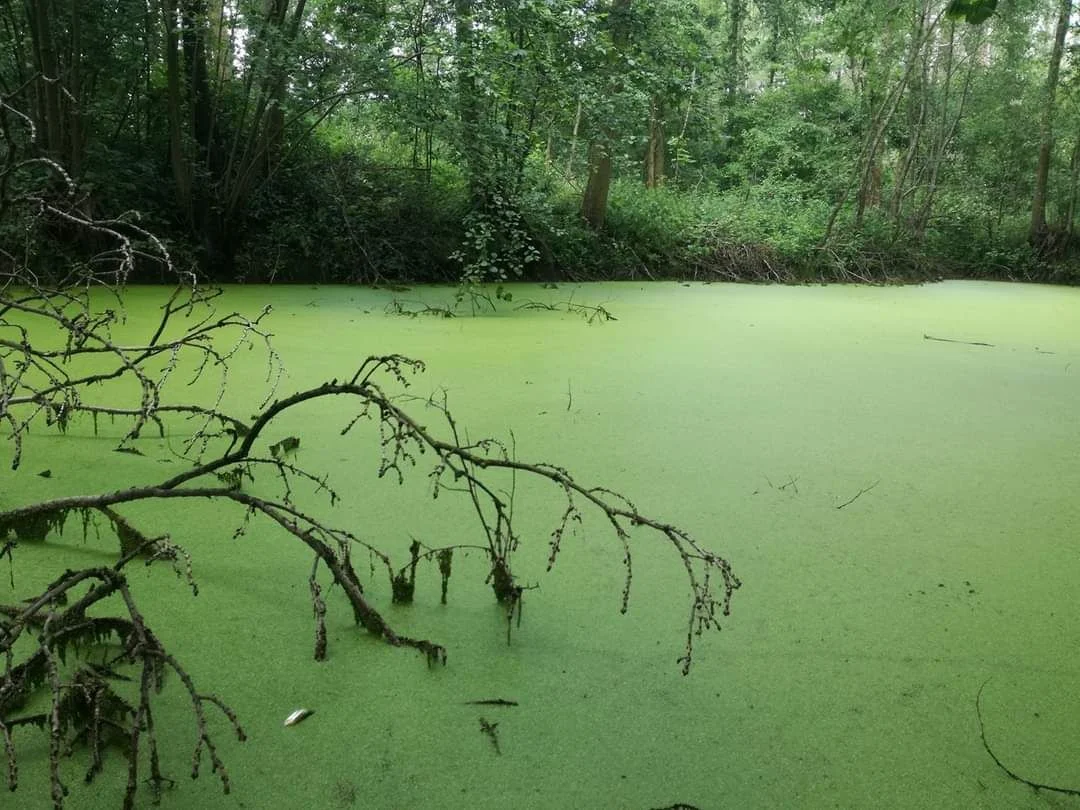
The Meteoryt Morasko Nature Reserve is one of the most fascinating places on the map of Poland. It is no accident that it became the main inspiration for naming our clinic Medeor Clinic.
Located in the northern part of Poznań, the reserve covers an area of 54.28 ha. It was established on 24 May 1976 to protect the unique geological formations created when a meteorite fell around 5,000 years ago. You can read here about what was happening in the world of medicine at that time.
But let us return to the Reserve. Within it there are six craters, the largest of which is about 100 metres across and 11.5 metres2 deep. The reserve is not only a place of great scientific importance; it also attracts nature lovers and tourists, who can admire its scenic landscapes and its rich flora and fauna. The reserve is dominated by oak and hornbeam woodland, where many rare plant species grow, such as the martagon lily and asarabacca (wild ginger). Rare birds can also be found here, such as the nightjar and the black woodpecker. A walking trail runs through the reserve, and points of interest are described on information boards, which makes it an excellent place for educational trips.
5 facts about meteorites and the reserve in Morasko
1. What is the difference between a meteor and a meteorite?
A meteorite is a fragment of an asteroid or comet that has reached the surface of a planet or moon in solid form. A meteor, on the other hand, is simply a streak of light in the Earth’s atmosphere caused by a meteoroid passing through it. The science of meteorites is called meteoritics.
2. The largest meteorite crater in Poland
The Meteoryt Morasko Reserve is home to the largest meteorite crater in Poland. It is about 100 metres across and 11.5 metres2 deep. It is one of the few places in the world where you can see such large meteorite craters that are easily accessible to visitors.
3. Unique geological finds
Many fragments of the meteorite have been found in the reserve, the largest weighing as much as 261 kg. These unique finds attract scientists from all over the world, who study the composition and origin of these space rocks. Yet that is nothing compared with the largest meteorite in the world, called Hoba, which weighs as much as 60 tonnes. It was found in 1920, in Namibia.
4. The history of the discovery of the Morasko Meteorite Reserve
The first fragment of the Morasko meteorite was discovered in 1914 by a German soldier while military fortifications were being built. Since then the reserve has been the site of much scientific research and many discoveries, which have contributed to a better understanding of the history of our planet and of space.
5. Meteorites are not a thing of the past.
On 22 August 1888, in the city of Sulaymaniyah in Iraq, a person died after being struck by a meteorite. And in 1954, in the small town of Sylacauga in the USA, a meteorite weighing almost four kilograms crashed through a roof and hit a 34-year-old woman lying in bed. Fortunately, this time it ended with nothing worse than a minor hip injury.