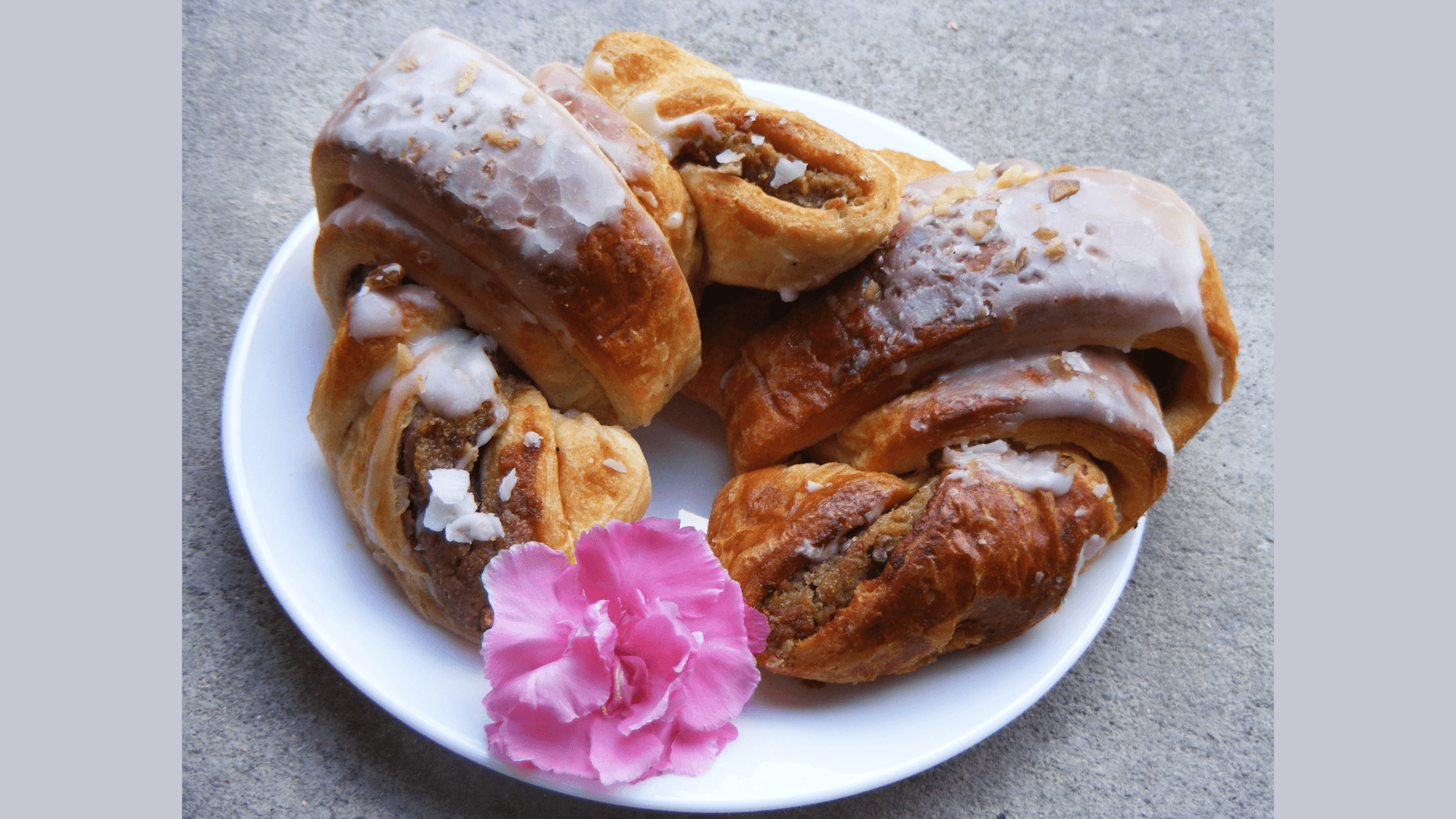
11 November is the day when the whole of Poland celebrates Independence Day. In Poznań, besides the national celebrations, the day has one more special meaning. It is the time when the people of Poznań eagerly reach for rogale świętomarcińskie, or St Martin’s croissants – a symbol of local tradition and history. But how did the croissants win such a special place in the hearts and stomachs of the people of Poznań?
The legend of St Martin
One winter night, a Roman soldier who centuries later was recognised as a saint came across a beggar shivering with cold. Martin did not hesitate: he got off his horse, cut his cloak in half and gave one half to the poor man. This act of charity became a symbol of kindness, empathy and support for those in need.
The tradition of the St Martin’s croissant
In 1891 in Poznań, the parish priest of St Martin’s, Fr Jan Lewicki, appealed to the faithful to follow the saint’s example and share with the poor on their patron’s day. One of the parishioners was Józef Melzer, a local baker, who decided to bake pastries in the shape of a horseshoe – symbolising St Martin’s horse. Melzer handed out his baking to the poor, and his idea quickly caught on.
The St Martin’s croissant – what goes into it?
The St Martin’s croissant became not only a symbol of helping those in need but also famous for its refined taste. A generous pastry made from laminated yeast dough, filled with a mixture of white poppy seeds, sugar, ground almonds, nuts, vanilla, cream, raisins and orange peel, won (and still wins) the hearts and palates of the people of Poznań. The croissants were generously sprinkled with crushed nuts and icing, which gave them their distinctive look and taste.
The List of Traditional Products
St Martin’s croissants became so special that in 2008 they were entered on the European Union’s List of Traditional Products. This means that only baked goods meeting specific requirements may bear the name "rogale świętomarcińskie". They are traditionally baked mainly in and around Poznań, but their popularity is spreading across the whole of Poland.
Celebrating today
Today, on 11 November, the people of Poznań gather in the streets and take part in fairs and parades, while St Martin’s croissants reign on the tables. It is a time when the city’s residents not only celebrate the nation regaining its independence but also keep alive a local tradition that connects them with the past and brings joy to everyday life.
Facts about St Martin’s croissants
- Shape: The croissants are shaped like a horseshoe, a nod to the legend of St Martin.
- Filling: The traditional filling of white poppy seeds, dried fruit and nuts is the secret of their unique taste.
- Weight: Each croissant weighs between 150 and 250 grams.
- Calories: One St Martin’s croissant has about 800 calories
- Uniqueness: The pastries must meet specific standards to bear the name "rogale świętomarcińskie" – among other things, they must be made not with butter but with margarine!
Eating one St Martin’s croissant (about 200 grams) means about 800 calories. Burning off that many calories can take quite a lot of effort, but it does not have to 😉 Here are a few activities that can help you.
- Sleep: While we sleep we burn about 50 calories an hour. This means you would have to sleep for about 16 hours to burn off the calories from one croissant.
- Lying in front of the TV: A fairly lazy activity that burns about 60-70 calories an hour. To burn 800 calories, you would have to lie in front of the TV for about 12-13 hours.
- Walking: At an average walking pace (about 5 km/h) we burn about 240-300 calories an hour. To burn off the calories from one croissant, you would have to walk for about 2.5-3.5 hours.
- Cycling: Cycling at a moderate intensity burns about 500-600 calories an hour. To burn 800 calories, you would have to cycle for about 1.5 hours.
- Sex: depending on the intensity, you can burn about 100-150 calories an hour. To burn off the calories from one croissant, you would have to indulge in this pleasure for about 5-8 hours, phew…
Remember that these figures are approximate and may vary depending on individual characteristics such as weight, age and metabolic rate.
When you visit Medeor-Clinic in Poznań, do not forget to try a St Martin’s croissant! Many local bakeries and patisseries offer this speciality not only on 11 November but all year round. You can eat it straight away, or…freeze it. Warmed up in the oven, it tastes just as delicious as fresh from the bakery!