
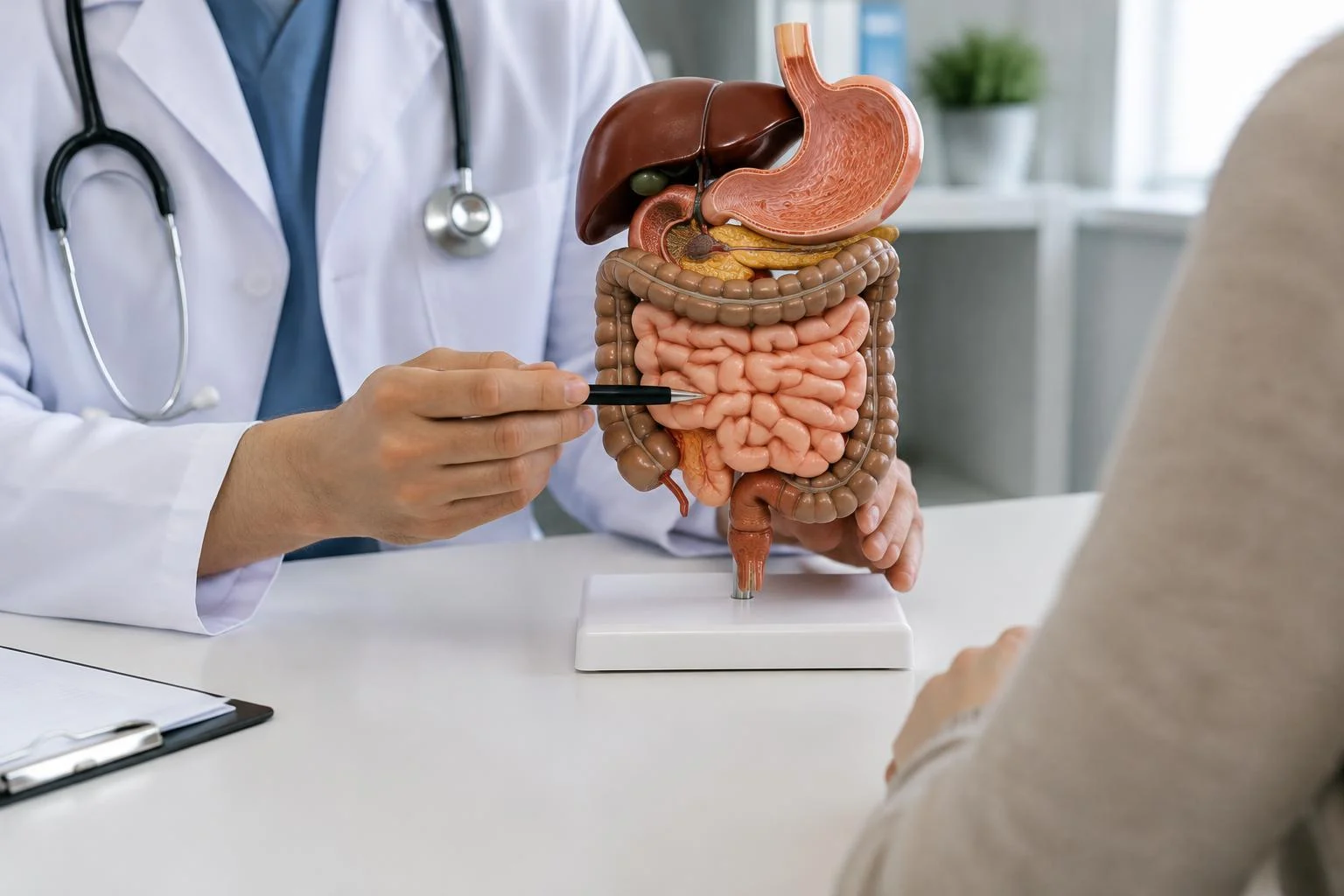
About the specialty
Chronic abdominal pain, heartburn, bloating or bowel problems can make everyday life difficult. If the symptoms keep coming back or last a long time, it is worth consulting a specialist. The gastroenterologist at Medeor Clinic in Poznań diagnoses and treats diseases of the digestive tract. Our gastroenterology clinic offers private consultations for adults and children.
Medeor Clinic is at ul. Morasko 24, in the north of Poznań, next to Naramowice. We offer an individual approach to each patient, comfortable visits and access to diagnostics, including endoscopic examinations.
Gastroenterology: what does a gastroenterologist do?
Gastroenterology is the field of medicine that diagnoses and treats diseases of the digestive system. It covers both digestive complaints and diseases of individual organs, such as the oesophagus, stomach, duodenum, small intestine, large intestine, liver, pancreas and bile ducts.
A gastroenterologist helps find the cause of the symptoms, reviews test results and chooses the right course of action. They diagnose new complaints and also look after patients with chronic diseases diagnosed earlier.
Many digestive symptoms are non-specific. Abdominal pain or a feeling of fullness after a meal, for example, can occur with various conditions, but they do not always mean a disease that needs intensive treatment. The doctor’s task is to decide whether further tests, a change of diet, medication or another specialist consultation is needed.
When should you see a gastroenterologist?
A gastroenterology consultation is advisable especially when symptoms keep coming back, get worse or do not go away despite treatment so far. The most common reasons for seeing a gastroenterologist include:
- Recurring abdominal pain, especially related to eating or bowel movements.
- Bloating and excessive wind, a feeling of fullness and discomfort after meals.
- Heartburn and regurgitation, which may accompany gastro-oesophageal reflux disease.
- Chronic diarrhoea or constipation, as well as persistent changes in bowel habits.
- Nausea, feeling full quickly and indigestion, especially when the symptoms come back regularly.
- Abnormal test results, for example liver enzymes, anaemia or changes found during an abdominal ultrasound.
It is also worth seeing a gastroenterologist when your GP or internist recommends further diagnostics of the digestive system. A consultation may also be needed to discuss the results of a gastroscopy, colonoscopy or other earlier tests.
Some symptoms need urgent medical assessment. These include gastrointestinal bleeding, black tarry stools, increasing difficulty swallowing and unintended weight loss. Sudden, very severe abdominal pain, heavy bleeding or vomiting blood need urgent medical help, not a wait for a planned consultation.
Which diseases does a gastroenterologist diagnose and treat?
A gastroenterologist deals with a wide range of conditions affecting the digestive system. Consultations cover, among others:
- Gastro-oesophageal reflux disease, which can cause heartburn, a burning sensation behind the breastbone and acid regurgitation.
- Diseases of the stomach and duodenum, including gastritis, peptic ulcer disease and Helicobacter pylori infection.
- Irritable bowel syndrome (IBS), whose symptoms may include abdominal pain, bloating and changes in bowel habits.
- Coeliac disease, an autoimmune disease triggered by eating gluten in people with a genetic predisposition.
- Inflammatory bowel disease, such as Crohn’s disease and ulcerative colitis.
- Diseases of the liver, pancreas and bile ducts, which may require assessment of laboratory results, imaging and further specialist diagnostics.
Some conditions need long-term care, monitoring of disease activity and adjustments to treatment. This applies especially to chronic inflammatory bowel diseases and other disorders whose course can change over time.
A gastroenterologist also takes part in diagnosing changes found during endoscopic examinations, including colorectal polyps. Depending on the result and the histopathology, the doctor may recommend further observation, a follow-up colonoscopy or a consultation at a centre that treats the specific condition.
What does a visit to the gastroenterologist at Medeor Clinic look like?
The first gastroenterology consultation starts with a medical history. The doctor asks about the type and duration of the symptoms, past illnesses, medication and the results of earlier tests. Information about diet, similar conditions in the family and what makes the symptoms worse may also matter.
Depending on the problem, the doctor may carry out a physical examination, including an examination of the abdomen. They then discuss the possible causes of the symptoms and the next steps.
Not every visit requires further diagnostics. If, however, the symptoms or earlier results point to a need for it, the specialist may recommend laboratory tests, imaging or endoscopy. Their scope depends on the patient’s individual situation.
How to prepare for a gastroenterology consultation?
Before the visit, it is worth gathering your medical records, especially:
- results of earlier blood tests and other laboratory tests,
- reports of ultrasound, CT or MRI scans, if you have had them,
- results of gastroscopy, colonoscopy and histopathology,
- a list of the medicines and supplements you currently take,
- information about past illnesses and treatment so far.
It can also help to write down your main symptoms and questions for the doctor. This organises the information and makes better use of the consultation. Not having earlier test results is no obstacle to booking a first visit.
Diagnostic tests in gastroenterology: gastroscopy and colonoscopy
Endoscopic examinations play an important role in diagnosing digestive diseases. They let the doctor see the lining of parts of the digestive tract with a special instrument fitted with a camera, called an endoscope.
At Medeor Clinic you can have a gastroscopy and colonoscopy in Poznań. These examinations are done when medically indicated, after proper preparation and assessment.
Gastroscopy
Gastroscopy examines the upper digestive tract: the oesophagus, stomach and duodenum. It may be recommended, among others, to diagnose persistent stomach complaints, swallowing problems or certain symptoms of reflux disease.
If indicated, the doctor may take biopsies for histopathology during the examination. This gives additional information needed for a diagnosis.
Colonoscopy
Colonoscopy examines the large intestine and, in some cases, the last part of the small intestine. It is used, among others, to diagnose chronic bowel problems, bleeding from the lower digestive tract and inflammatory bowel disease, and in bowel cancer screening.
It also detects polyps, and many of them can be removed during the procedure. What is done depends on the type of change, the medical indications and the technical conditions of the examination.
Please note that gastroscopy and colonoscopy are separate services. They are not automatically part of a gastroenterology consultation. The doctor decides whether they are needed based on the symptoms and diagnostics so far.
Comprehensive care for patients with digestive diseases
Diagnosing and treating digestive diseases may require doctors of different specialities to work together. At Medeor Clinic, patients can use the additional consultations and tests available on site.
For conditions in which diet matters, a helpful addition to treatment may be a dietitian consultation. A dietitian can help adapt your diet to the diagnosed condition, food tolerance and individual nutritional needs. Dietary advice should take into account the diagnosis and the treatment plan set by the doctor.
If the symptoms mainly concern the anus or the last part of the large intestine, for example bleeding from haemorrhoids, an anal fissure or pain during bowel movements, a proctology consultation may also be advisable. The right speciality depends on the nature of the symptoms and the medical assessment.
With different specialists and tests in one place, the next stages of diagnosis and treatment can be planned around the patient’s needs.
Gastroenterology consultations for children
Children have digestive problems too. Recurring abdominal pain, chronic constipation, diarrhoea, eating difficulties or poor weight gain may need further diagnostics.
Medeor Clinic offers gastroenterology consultations for children. During the visit, the doctor takes a history from the parent or carer and, as the child’s age and abilities allow, from the child. They review the course of the symptoms so far, the child’s development and earlier test results.
Not every tummy ache in a child means a digestive disease. If, however, the symptoms recur, affect everyday life or come with other worrying symptoms, it is worth consulting a paediatrician or a gastroenterologist.
Gastroenterology clinic in Poznań: why Medeor Clinic?
Medeor Clinic is a private medical centre in Morasko, in the north of Poznań, convenient for residents of Naramowice, Piątkowo, Umultowo, Radojewo, Suchy Las and the surrounding area.
In our gastroenterology clinic we value an unhurried conversation, respect for privacy and an individual approach to health problems. Patients have access to:
- Private gastroenterology consultations for adults and children.
- Endoscopic diagnostics, including gastroscopy and colonoscopy, available as separate services.
- Additional specialist consultations, including dietetics and proctology.
- Comfortable visits and free parking at the clinic.
Our aim is to give patients clear information about their health and the options for further diagnosis and treatment. What is done should always follow individual medical indications.
Gastroenterologist in Poznań: consultation prices
Gastroenterology consultations at Medeor Clinic are provided by dr n. med. Waldemar Malewski, specialist in gastroenterology.
| Consultation | Duration | Price |
|---|---|---|
| Gastroenterology consultation, adults | 15 minutes | PLN 350.00 |
| Gastroenterology consultation, children | 15 minutes | PLN 380.00 |
The prices are for medical consultations. Any additional diagnostic tests, including gastroscopy and colonoscopy, are charged separately, according to the services provided.
Book a visit to a gastroenterologist in Poznań
If you need a consultation about recurring digestive problems or diseases of the intestines, stomach, liver or other digestive organs, contact Medeor Clinic. A visit to the gastroenterologist lets you discuss your symptoms and decide whether further tests or treatment are needed.
Book a visit by phone on +48 61 161 11 00 or see the Medeor Clinic contact page.
We look forward to seeing you at our clinic at ul. Morasko 24, 61-680 Poznań.
Gastroenterologist in Poznań: frequently asked questions
Do I need a referral to see a gastroenterologist privately?
No. You can book a private gastroenterology consultation at Medeor Clinic without a referral. It is worth bringing the results of earlier tests and records of your treatment so far.
Does the gastroenterologist also see children?
Yes. Medeor Clinic offers gastroenterology consultations for adults and children. For a child, it is worth preparing information about the course of the symptoms, earlier illnesses and treatment. A consultation for a child costs PLN 380.
Is a gastroscopy or colonoscopy done during the visit?
No. A gastroenterology consultation is a separate service. During the visit, the doctor can assess whether a gastroscopy or colonoscopy is indicated and recommend the right examination. Both procedures are available at Medeor Clinic as separate services and require preparation.