
About the service
Modern sports medicine and trauma medicine are increasingly turning to solutions that use the human body’s natural regenerative potential. One of the most highly regarded methods in this field is PRP therapy, more widely known as platelet-rich plasma. Based on components obtained directly from the patient’s own blood, this procedure can effectively support the treatment of many musculoskeletal conditions.
At our Medeor Clinic medical centre, located in the Morasko district of Poznań, we offer patients access to full diagnostics and injection procedures. Thanks to the clinic’s location, our services are used not only by residents of Naramowice and Piątkowo but also by people from nearby towns such as Suchy Las.
What is platelet-rich plasma (PRP)?
Platelet-rich plasma (PRP) is an autologous preparation obtained from the patient’s own blood. It has a much higher concentration of platelets than is naturally found in circulating peripheral blood. The key element that makes this therapy so effective is the growth factors released from the platelet granules.
Concentrated plasma contains proteins that initiate and accelerate the natural healing process and tissue regeneration. Once injected into the affected area, these substances stimulate cell proliferation, collagen synthesis and the formation of new blood vessels. As a result, regeneration of damaged structures proceeds more efficiently, which is particularly important for tissues with a poor blood supply, such as tendons and ligaments.
Indications for the procedure – what does an orthopaedic surgeon treat?
An orthopaedic specialist may recommend plasma in many cases where standard conservative treatment does not bring sufficient results. Platelet-rich plasma treatment is used above all in:
- Treating sports injuries: partial tears of muscles and ligaments (e.g. the anterior cruciate ligament) and tendon injuries (e.g. the Achilles tendon).
- Degenerative diseases: degenerative changes in the joints (knee, hip, ankle), where the aim is to relieve pain and improve joint function.
- Enthesopathies: painful changes where muscles attach to bone, such as tennis elbow, golfer’s elbow or a heel spur.
- Articular cartilage damage: supporting repair processes on the joint surfaces.
It is worth stressing that plasma is a biological method. This means that we do not introduce synthetic chemicals into the body but use its own repair potential, which makes this one of the safer methods in modern orthopaedics.
What does the PRP procedure at Medeor Clinic involve?
Every appointment begins with a thorough assessment carried out by a doctor. If there are no contraindications, the procedure can be performed as an outpatient during a single appointment.
- Taking blood: The process begins with taking a small amount of the patient’s blood (usually 10 to 20 ml), just as for routine diagnostic tests.
- Centrifugation: The blood is placed in a specialist medical centrifuge. At this stage the red and white blood cells are separated from the platelets contained in the plasma. The result is a preparation with a high concentration of regenerative factors.
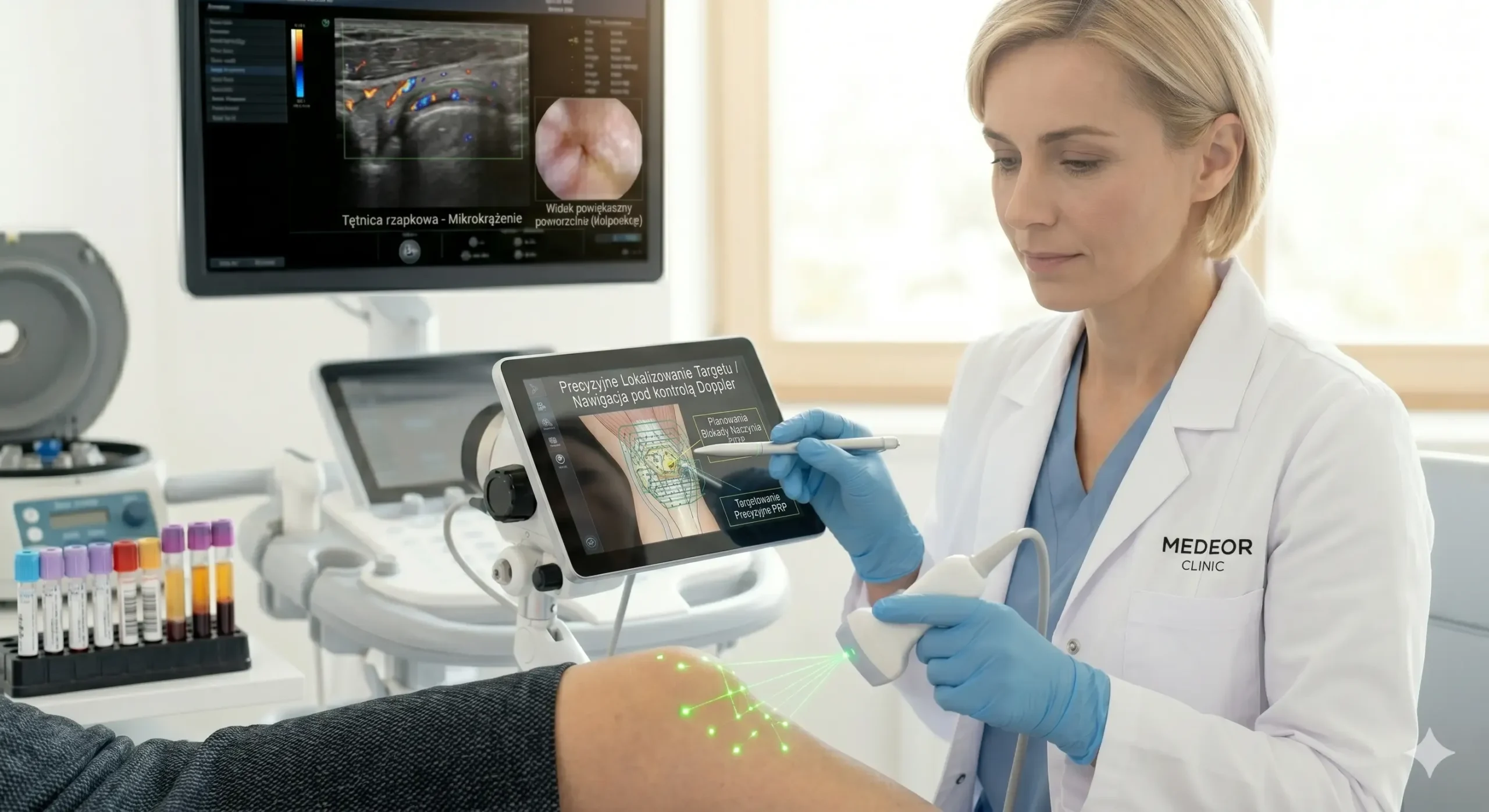
- Injecting the plasma: The plasma prepared in this way is injected by the doctor directly into the area that needs treatment. At Medeor Clinic we often perform the injection under ultrasound guidance, which ensures that the needle reaches the damaged tissue precisely and in turn maximises the therapeutic effect.
The whole procedure usually takes about 30-40 minutes. Because we use biological material from the same person, the risk of allergic reactions and infections is reduced to a minimum.
Benefits of platelet-rich plasma therapy
Patients who choose platelet-rich plasma treatment in Poznań can count on a number of benefits:
- Safety: Autologous material eliminates the risk of rejection or allergy.
- Quick recovery: The therapy allows a faster return to everyday activities and sport.
- Minimally invasive: The procedure requires no incisions or general anaesthesia.
- Effectiveness: Releasing growth factors directly at the site of injury strongly stimulates the cells to work.
Specialists and prices for PRP treatment
Below is information about the doctors who assess patients for and perform platelet-rich plasma procedures at our clinic in Poznań.
| Specialist | Service | Price |
|---|---|---|
| Damian Bartkiewicz | Orthopaedic consultation | 300 PLN |
| Platelet-rich plasma* | 1000 PLN | |
| Cyprian Smak | Orthopaedic consultation | 300 PLN |
| Platelet-rich plasma* | 1000 PLN |
*The procedure is performed after a prior consultation with a doctor and a medical assessment. The price includes preparing and injecting the preparation.