
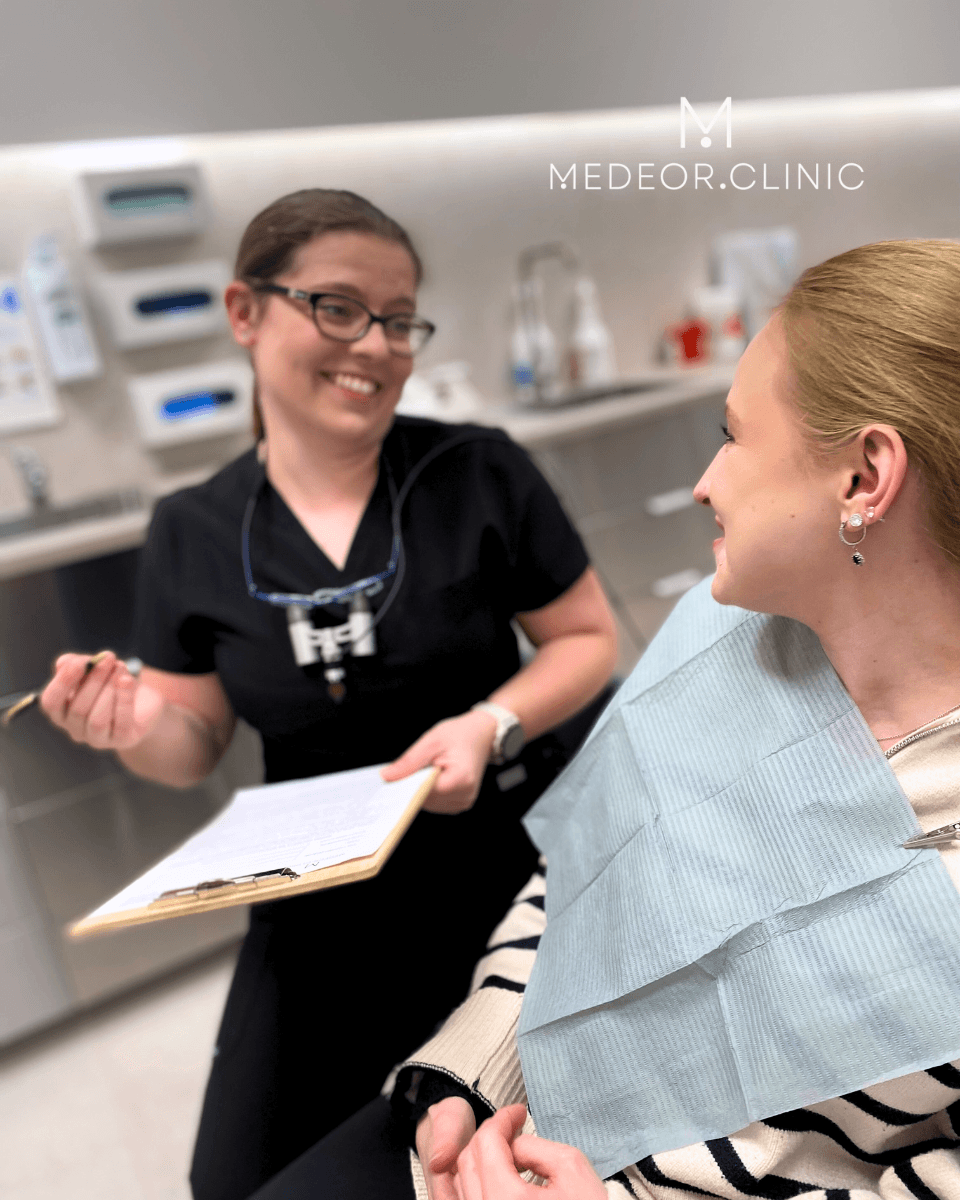
From fear to a smile: an interview with lek.dent. Agnieszka Falicka on dental treatment under general anaesthesia
Editor: Thank you for agreeing to talk to us. Let’s start with the most important question. What are the most common reasons patients are afraid of going to the dentist?
Lek. dent Agnieszka Falicka: Fear of going to the dentist is very common and has many sources. Let me give you a few of the most common reasons.
The first is pain and the fear of discomfort. This is one of the biggest barriers. Patients often worry that the procedure will hurt, which may stem from earlier unpleasant experiences. It is worth stressing, however, that modern dentistry has anaesthetics that greatly minimise pain.
Another factor is an unpleasant experience in the past. Many people carry memories from childhood, when visits to the dentist were often traumatic. Experiences like these can cause anxiety that lasts a lifetime. Sometimes we pass this fear on to our children, who have no experience of dentistry yet but, seeing our reactions, start to feel stressed about going to the dentist too.
The next issue worth raising is a lack of control. During a procedure the patient often feels powerless, which can heighten the fear. The feeling of having no influence over the situation can be terrifying for many people. This is directly linked to fear of the unknown. Dental appointments can cause anxiety, especially if the patient does not know what to expect. Uncertainty about what will happen can lead to panicky thoughts. That is why it is worth planning appointments in advance and discussing them in detail with your dentist.
Editor: What are the symptoms of dental anxiety and how can they be recognised in patients? Or how can I recognise it in myself while waiting for an appointment?
Lek. dent Agnieszka Falicka: The symptoms of anxiety can vary, and recognising them is key to understanding the problem. I divide them into several categories.
Physical symptoms, when patients may experience trembling hands, excessive sweating, a racing pulse and difficulty breathing. Suddenly you feel your heart beating faster and your breathing speeding up. In extreme cases, fainting may occur.
Psychological symptoms show as thoughts of avoiding the dentist, a sense of panic or constant worrying about upcoming procedures. Many people also fear losing consciousness or not being able to cope with the stress.
The last symptoms sound innocuous. I mean avoidance behaviours. Patients who feel strong anxiety may avoid booking appointments, which over time leads to their oral health getting worse. Recognising these symptoms is key so that the right steps can be taken to overcome them.
Editor: What is treatment under general anaesthesia and who is it suitable for?
Lek. dent Agnieszka Falicka: Treatment under general anaesthesia is a method that allows the procedure to be carried out while the patient is in a deep sleep, which eliminates the pain and stress of the procedure. It is a suitable solution for several groups of patients:
People with disabilities: People with intellectual disabilities, autism spectrum conditions or neurodegenerative diseases such as Alzheimer’s may not understand the dentist’s instructions. They often react with fear to touch, bright light or particular sounds in the surgery, which makes it impossible to carry out the procedure while they are awake. General anaesthesia removes this stress completely. For many people with physical disabilities, travelling to the clinic and the change of surroundings itself are a huge logistical and emotional challenge. I am well aware of how much effort this takes for the patient and for the carers who have to organise it all. In a single session under general anaesthesia we can carry out comprehensive treatment in one appointment.
Adults: Those with severe dental anxiety, and also patients who need complex procedures such as multiple extractions or implant placement. Adults who have had negative experiences in the past may also find relief with this method.
Children: From the age of 2.5, especially when the procedure is complex or the child is too young to understand what is happening. General anaesthesia is safe and allows many procedures to be done at once, which benefits young patients. This matters because tooth decay in children spreads extremely fast. Baby teeth are not as resistant to acids and decay as permanent teeth. I think we will have to cover the treatment of baby teeth at our next meeting. It is a very broad and important subject. We need to bust the oft-repeated myth that “baby teeth don’t need treating”.
Editor: I think that’s a great subject for another interview! But another question about treatment under general anaesthesia comes to mind. What are the benefits of treatment under general anaesthesia compared with conventional treatment?
Lek. dent Agnieszka Falicka: Treatment under general anaesthesia has many benefits compared with conventional treatment. I’ll name just a few here.
The first benefit, which is sometimes the most important to the patient, is no pain. Thanks to the anaesthesia, the patient feels no discomfort or pain, which makes the procedure much more bearable.
The second is saving time. Under general anaesthesia the dentist can do more work in less time, which means the patient does not have to keep coming back for further appointments to have something treated. Of course, you still need to come for check-ups so that the condition of your teeth can be monitored on an ongoing basis.
Another benefit I can mention is greater comfort during the procedure. Patients can feel more at ease knowing that they will not have to go through the stress of the procedure while awake.
Editor: What advice would you give people who are afraid of going to the dentist?
Lek. dent Agnieszka Falicka: Hmm… Let me think. The first thing that comes to mind is communication. It is important to find a dentist you can feel at ease with, who inspires trust and radiates empathy.
Editor: Talking to you, I get the feeling I’ve found just such a dentist!
Lek. dent Agnieszka Falicka: Thank you for the kind words. As I mentioned, communication with patients is important to me. It is crucial to talk openly with your dentist about your fears. It helps to explain exactly what causes the fear. Modern dentistry is built on understanding the patient. My role as a doctor, in turn, is to explain to the patient what will happen during treatment. Understanding what is going to happen can help reduce anxiety. Many people fear what they don’t know.
In addition, if you feel symptoms of anxiety before an appointment, it is worth trying relaxation techniques such as deep breathing or meditation. They help calm your nerves and prepare you mentally for the appointment.
If the fear is very strong, it is worth asking your dentist about the option of treatment under general anaesthesia. It can be an excellent solution for those who find it hard to overcome their fears.
It is also worth remembering regular visits to the dentist. The more often you see your dentist, the more used to the dental practice you will become. Regular appointments help build trust and reduce anxiety.
For children, familiarisation visits are important to get them used to the new place, smells, sounds and activities involved in dental treatment. Let’s not forget that the earlier we detect inflammatory changes, the less intervention they need. The worst choice is to turn up at the surgery only when a tooth hurts. The child then associates the dentist only with unpleasant experiences.
Editor: Thank you for this valuable information. It is worth remembering that fear of the dentist can be overcome!
Lek. dent Agnieszka Falicka: Absolutely! The key is communication and a relationship built on trust. There is no need to be afraid of the dentist – it is a step towards a healthy smile!
Article author