
Although tennis elbow is often associated with sportspeople, it can affect anyone. It is a condition that can make everyday life considerably harder. In this article we discuss in detail what exactly tennis elbow is, how it is diagnosed and what effective treatments modern medicine offers to help patients regain full function, often through manual therapy.
What is tennis elbow?

Definition and characteristics
Tennis elbow, also known as lateral epicondylitis of the humerus, is a common condition characterised by pain around the outer part of the elbow. This pain results from overload and micro-damage of the tendons of the wrist extensor muscles, which attach to the lateral epicondyle of the humerus. It often affects people who make repetitive wrist and forearm extension movements, leading to inflammation of the tissue that makes even simple everyday activities difficult and requires the use of a brace.
Types of tennis elbow
Although we commonly speak of “tennis elbow”, the condition can take different forms, depending on the degree of damage and how long the symptoms have lasted. We distinguish an acute phase, in which pain comes on suddenly after intense exertion, and a chronic phase, in which symptoms persist for a longer time, often leading to degenerative changes in the tendons. Proper diagnosis is key to choosing the right treatment and to ruling out other causes of elbow pain, so as to prevent the condition from progressing further and relieve the patient’s suffering.
Golfer’s elbow vs tennis elbow
Often confused with tennis elbow, golfer’s elbow (medial epicondylitis) is a similar condition, but located on the inner side of the elbow joint. Tennis elbow affects the wrist extensor muscles and causes pain on the outer side of the elbow, while golfer’s elbow involves the flexor muscles and the pain radiates from the medial epicondyle. Distinguishing between these two conditions is extremely important for correct diagnosis and for choosing the right treatment plan, which allows the joint’s function to be restored effectively.
Causes of tennis elbow

Causes and risk factors
The main cause of tennis elbow is chronic overload and overuse of the wrist and forearm extensor muscles. Risk factors include age (it is most common in people aged 30–50), sex (slightly more common in men) and making repetitive movements. Certain occupations and hobbies, such as carpentry, painting, computer work or, of course, playing tennis, significantly increase the risk of the condition. It is important to avoid putting prolonged strain on the elbow joint.
What activities cause tennis elbow?
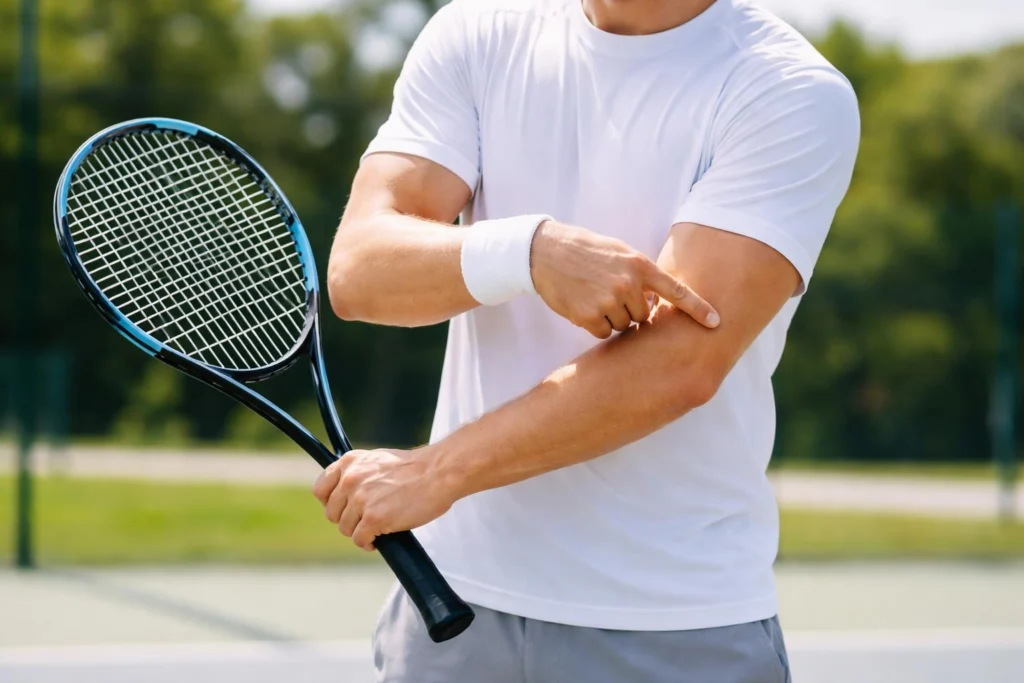
Tennis elbow is a condition resulting from micro-injuries to the tendons of the wrist extensor muscles, which attach to the lateral epicondyle of the humerus. The activities that most often lead to it include those requiring a strong grip and repetitive extension or flexion of the wrist. A classic example is playing tennis, especially with poor backhand technique. Other common causes are manual work, such as painting, using vibrating tools, gardening or prolonged use of a computer mouse.
The importance of repetitive movements
Repetitive movements, especially those that engage the wrist and forearm extensor muscles, are a key factor in the development of tennis elbow. Even seemingly harmless but regularly repeated activities, such as typing, playing a musical instrument or crocheting, can lead to micro-overload of the tendons around the lateral epicondyle. Accumulated damage to the connective tissue in this area eventually causes inflammation and pain, turning tennis elbow into a serious problem that makes everyday life difficult.
Symptoms of tennis elbow

Typical symptoms and complaints
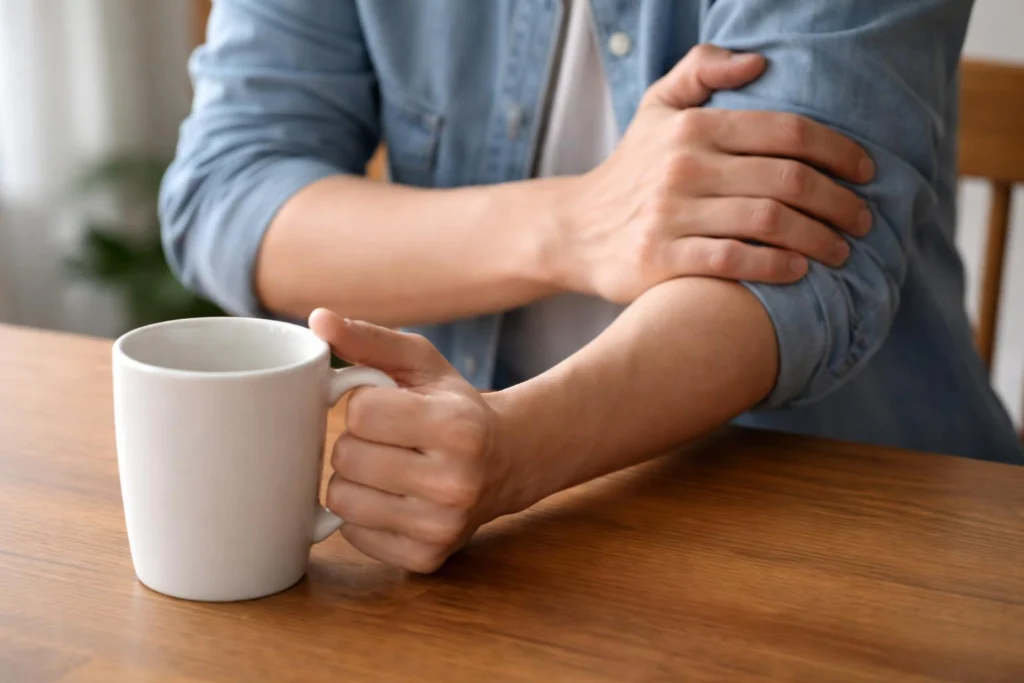
Tennis elbow shows itself above all as pain on the outer side of the elbow, which often radiates along the forearm down to the wrist. The patient may feel the pain get worse when extending the wrist, gripping objects or even during simple everyday activities such as lifting a glass. These complaints result from damage to the tendon tissue around the lateral epicondyle of the humerus, which is typical of overload of the wrist extensor muscles. Over time the pain may become chronic and make everyday life difficult.
How to recognise tennis elbow?
Tennis elbow is diagnosed on the basis of its characteristic symptoms and a physical examination. Pain on the outer side of the elbow that gets worse when trying to extend the wrist or when gripping is a key indicator. There is often also tenderness to touch around the lateral epicondyle of the humerus. The patient may notice reduced grip strength, which makes everyday activities considerably harder. It is important not to ignore these signals and to consult a specialist as soon as possible for proper diagnosis and treatment.
Differences in symptoms between sportspeople and inactive people
The symptoms of tennis elbow may differ slightly between sportspeople and physically inactive people, although the underlying pain on the outer side of the elbow is common to both. Sportspeople, especially tennis players, may feel sharp pain when hitting the ball with a racket, which is a direct result of overload of the tendon and the wrist extensor muscles. In inactive people the pain often develops gradually, getting worse during repetitive movements related to work or hobbies. In both groups early diagnosis and the right treatment are key to preventing the damage from getting worse.
Diagnosing tennis elbow
Physical examination
A physical examination is the basis for diagnosing tennis elbow and allows an orthopaedic surgeon or physiotherapist to assess the condition of the elbow joint and the surrounding tissues accurately. During the examination the doctor checks for tenderness around the lateral epicondyle of the humerus and performs resistance tests to assess pain when extending the wrist and gripping. The range of movement in the joint and the muscle strength of the forearm are also assessed. These simple but effective methods allow the diagnosis to be confirmed initially and further diagnostic and treatment steps to be planned.
Imaging methods in diagnosis
In diagnosing tennis elbow, imaging is sometimes used in addition to the physical examination to rule out other conditions or to assess the extent of tendon damage. The most commonly used is a sonographic examination (ultrasound), which shows changes in the soft tissue, such as swelling, tendon rupture or degenerative changes around the lateral epicondyle of the humerus. In rarer cases, when the clinical picture is unclear or other pathologies are suspected, the doctor may order magnetic resonance imaging (MRI).
Orthopaedic consultation
A consultation with an orthopaedic surgeon is key to proper diagnosis and effective treatment of tennis elbow. Based on the history, the physical examination and any imaging results, the orthopaedic surgeon will make a precise diagnosis. They will then draw up an individual treatment plan, which may include conservative treatment, such as physiotherapy, drug therapy or modifying activity, and, in rare cases, consider surgery. The specialist’s professional approach gives the patient comprehensive care and a path back to full function.
Effective treatments for tennis elbow

Home remedies for tennis elbow
In dealing with tennis elbow, before considering more invasive methods, it is worth trying home remedies for tennis elbow. Resting from the activities that cause pain is absolutely key to avoiding further overload and tissue damage. Applying cold compresses to the area of the lateral epicondyle of the humerus may help reduce inflammation and swelling, relieving pain on the outer side of the elbow. Gentle massage of the sore forearm and stretching exercises can also support recovery and improve tendon flexibility, helping the treatment of tennis elbow.
Physiotherapy as a treatment
Physiotherapy plays an extremely important part in treating tennis elbow and is one of the most effective ways of restoring full function, through manual therapy. Individually chosen exercises for tennis elbow, including eccentric exercises that strengthen the wrist extensor muscles, help rebuild the damaged tendon and improve its endurance. The therapist may also use massage techniques, mobilisation of the elbow joint and taping to reduce pain and support recovery. The aim of physiotherapy is not only to relieve the symptoms of tennis elbow but also to eliminate the causes of the condition so that the patient can return to everyday activities, which often requires conservative treatment of tennis elbow.
Tennis elbow surgery: when is it necessary?
Tennis elbow surgery is a last resort and is considered only when conservative treatment of tennis elbow does not bring results. That is, when conservative treatment, including physiotherapy and drug therapy, has not brought the expected results after at least 6–12 months. The decision to operate is made by an orthopaedic surgeon, who analyses the extent of tendon damage and the severity of the tennis elbow symptoms that significantly hinder the patient’s everyday life, especially when moving the wrist. The aim of the operation is to remove the diseased tissue from around the lateral epicondyle of the humerus in order to reduce pain and restore full function of the elbow joint.
Preventing tennis elbow
How to avoid tennis elbow?
To avoid tennis elbow effectively, a mindful approach to everyday activities is key, especially those involving the forearm and wrist. Pay attention to the ergonomics of your workstation, using the right desk and chair height, which will help reduce overload of the wrist extensor muscles. Regular breaks at work, during which you can do simple stretching exercises, are extremely important for keeping collagen fibres flexible, keeping the tendons flexible and preventing micro-injuries around the lateral epicondyle, which can lead to elbow pain. Planning your effort sensibly and avoiding prolonged, monotonous strain on the joint are the basis of prevention, as is ruling out other causes of pain.
The importance of warming up and stretching
Warming up and stretching are fundamental to preventing tennis elbow, especially for physically active people, including sportspeople. Before starting intense exercise, such as playing tennis, spend a few minutes on a dynamic warm-up that will prepare the muscles and tendons for work. After training it is key to do static stretching, focusing on the forearm muscles, to increase their flexibility and prevent the tissue from shortening. Doing these simple things regularly significantly reduces the risk of overload and damage around the lateral epicondyle, protecting the elbow joint from developing the condition.
The right playing and working techniques
Correct technique, both in sport and at work, plays a key part in preventing tennis elbow. For sportspeople, especially tennis players, it is extremely important to refine stroke technique, particularly the backhand, to minimise excessive strain on the wrist extensor muscles. People who do manual or office work should take care of ergonomics and the correct positioning of their body and tools to avoid repetitive movements that lead to tendon overload. A consultation with a coach or physiotherapist can help identify and correct faulty movement patterns.