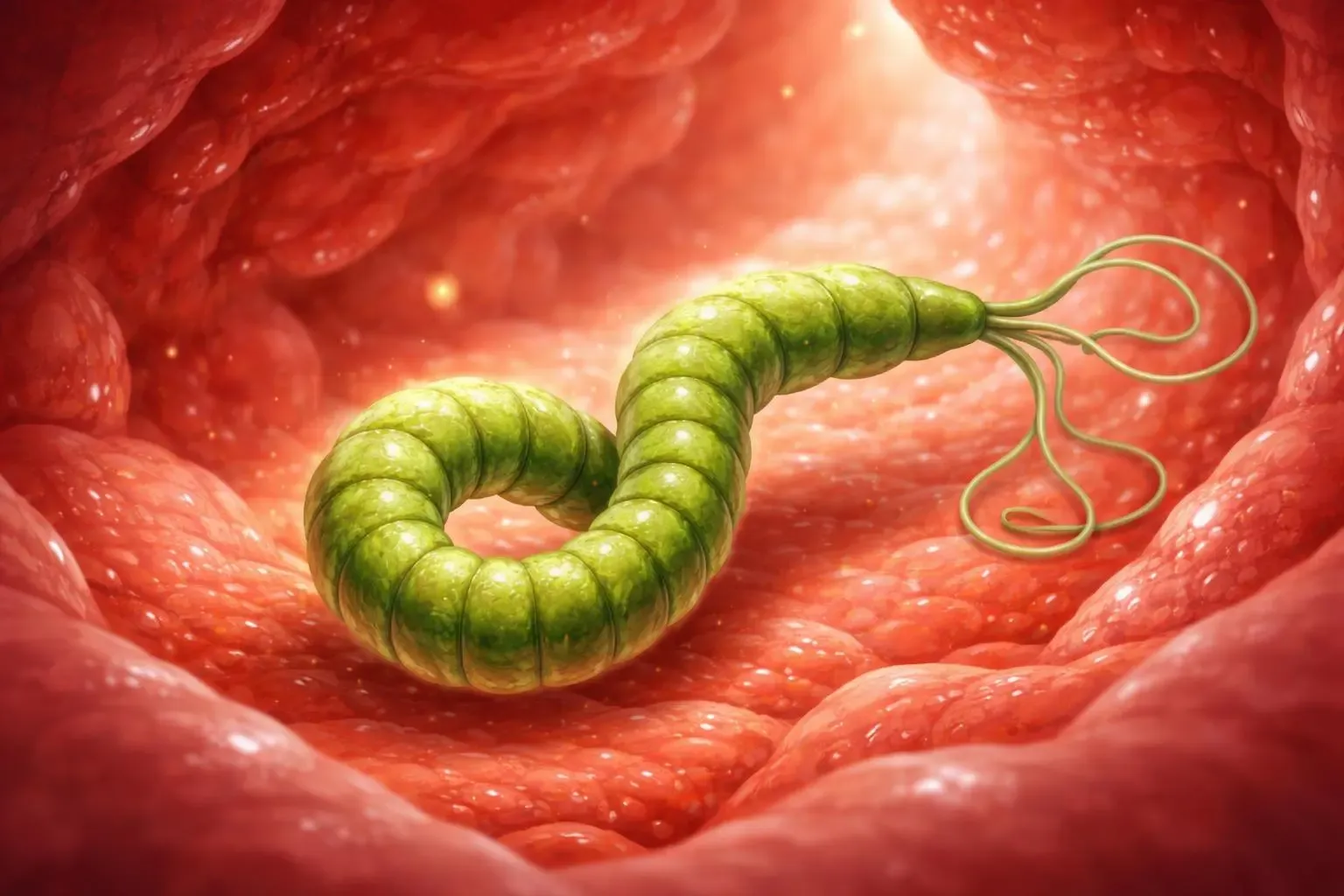
Helicobacter pylori infection is a common health problem that can lead to many unpleasant complaints, such as upper abdominal pain, and serious diseases. It is worth understanding what this bacterium is, how infection happens and which symptoms should concern us. Early diagnosis and the right treatment are key to staying healthy.
Helicobacter pylori infection

What is Helicobacter pylori?
Helicobacter pylori is a bacterium that colonises the stomach lining and is one of the most common causes of chronic gastritis. Its unique ability to survive in the acidic environment of the stomach, thanks to producing the enzyme urease, which converts urea into ammonia, allows it to colonise the stomach effectively. Helicobacter pylori infection can lead to a number of serious conditions, including:
- peptic ulcer disease of the stomach and duodenum,
- an increased risk of cancers, including stomach cancer.
How does infection happen?
Helicobacter pylori infection most often spreads by the oral-oral or faecal-oral route, which means that infection can occur through contact with contaminated food or water or close contact with an infected person. Sanitary conditions play an important part in the epidemiology of the infection. Families in which Helicobacter pylori is present are more exposed to transmission, and the risk of infection increases in environments with lower standards of hygiene.
Symptoms of Helicobacter pylori infection
The symptoms of Helicobacter pylori infection can be very varied, and in many people the infection causes no symptoms at all. When symptoms do appear, however, they most often concern the digestive system and include upper abdominal pain and nausea.
- chronic abdominal pain, especially in the upper abdomen,
- a burning sensation,
- bloating,
- nausea, which is one of the symptoms of infection with this bacterium.
- heartburn, which is one of the symptoms of infection with this bacterium.
Long-term inflammation of the stomach lining can lead to stomach or duodenal ulcers, which show themselves as more intense pain, often easing after a meal or after taking antacids. It is worth remembering that Helicobacter pylori infection increases the risk of stomach cancer, which is why early diagnosis and treatment are so important.
Diagnosing the infection

Types of tests for Helicobacter pylori
Eradication therapy is recommended to treat infection with this bacterium effectively. With Helicobacter pylori, accurate diagnosis is key, as it confirms the presence of the bacteria in the body. There are several methods of detecting this pathogenic bacterium, both invasive and non-invasive. The choice of test depends on many factors, including the clinical symptoms, the patient’s medical history and the availability of particular tests for this infection. The most commonly used diagnostic methods are shown below:
| The type of diagnostic method chosen is crucial for detecting infection with this bacterium. | Examples |
|---|---|
| Non-invasive | Breath tests, Helicobacter pylori stool antigen tests, serological tests detecting antibodies |
| Invasive (performed during gastroscopy) | The urease test, histopathological examination of stomach lining biopsies and serum IgG antibody testing are key in diagnosis. |
Breath test
The breath test is one of the most frequently chosen non-invasive methods of diagnosing Helicobacter pylori infection, and its results can help confirm the infection. It works on the basis of the bacterium’s ability to produce urease, an enzyme that breaks urea down into ammonia and carbon dioxide. After the patient drinks a special solution containing urea labelled with a carbon isotope, if Helicobacter pylori bacteria are present in the stomach, isotope-labelled carbon dioxide is released from the body in the exhaled air. This test is highly effective both for the initial diagnosis of infection and for monitoring the effectiveness of eradication therapy, confirming that the bacteria have been removed and reducing the risk of peptic ulcer disease.
Examining the stomach and duodenum
When the symptoms of infection are more severe or more serious conditions are suspected, such as stomach ulcers or a risk of stomach cancer, the doctor may order invasive diagnosis, that is, gastroscopy. Gastroscopy is an endoscopic examination of the upper digestive tract that allows a close look at the oesophagus, stomach and duodenum. During this examination it is possible to take biopsies of the lining for further histopathological testing and to perform a rapid urease test, which immediately detects the presence of Helicobacter pylori bacteria on the basis of ammonia production. Invasive diagnosis provides the most precise information about the condition of the stomach lining and allows early detection of any inflammatory or even cancerous changes.
Treating Helicobacter pylori infection
Antibiotics in therapy
Treatment of Helicobacter pylori infection, known as eradication therapy, usually involves a combination of antibiotics and proton pump inhibitors. The aim is to remove the bacteria completely from the stomach lining, which prevents further inflammation and minimises the risk of more serious complications, such as peptic ulcer disease of the stomach and duodenum or stomach cancer. Standard treatment regimens often include two different antibiotics to increase effectiveness and reduce the risk of bacterial resistance. Proton pump inhibitors reduce the production of stomach acid, which creates a more favourable environment for the antibiotics to work and helps any ulcers heal.
Other treatments
Apart from standard antibiotic therapy and proton pump inhibitors, in some cases, especially when first-line treatment proves ineffective, the doctor may use other methods. This may mean switching to a different antibiotic regimen, taking into account the bacteria’s resistance profile if such testing is available. In addition, in some countries the use of probiotics is increasingly being considered in treating Helicobacter pylori. Some probiotic strains may help eliminate Helicobacter pylori bacteria and ease the side effects of antibiotic therapy, such as diarrhoea or disturbed gut flora. A holistic approach to treatment always takes into account the patient’s individual needs and response to therapy.
Treatment effectiveness and monitoring
Treatment of Helicobacter pylori infection is highly effective, but it is crucial to follow the doctor’s recommendations and monitor the results of therapy. After treatment ends, usually after 4–6 weeks, a follow-up test for the bacteria is recommended to confirm that it has been eradicated. The most commonly used follow-up test is the non-invasive breath test or the Helicobacter pylori stool antigen test. Confirming that the bacteria have been removed is extremely important, because persistent infection can lead to symptoms returning and increase the risk of chronic inflammation, stomach ulcers and even cancer. Remember that a responsible approach to treatment is the basis of long-term health.
Cancer risk

How does Helicobacter pylori increase the risk of cancer?
Helicobacter pylori is a bacterium whose infection increases the risk of stomach cancer, as well as MALT lymphoma. Chronic inflammation of the stomach lining, caused by the long-term presence of this bacterium, leads to progressive changes in the cells. This process, involving inflammation, atrophy of the lining and intestinal metaplasia, can turn into dysplasia and, ultimately, cancer. By releasing toxins and inducing an inflammatory response, Helicobacter pylori constantly damages cells, which favours mutations and uncontrolled growth, increasing the risk of cancer.
Stomach ulcers and infection
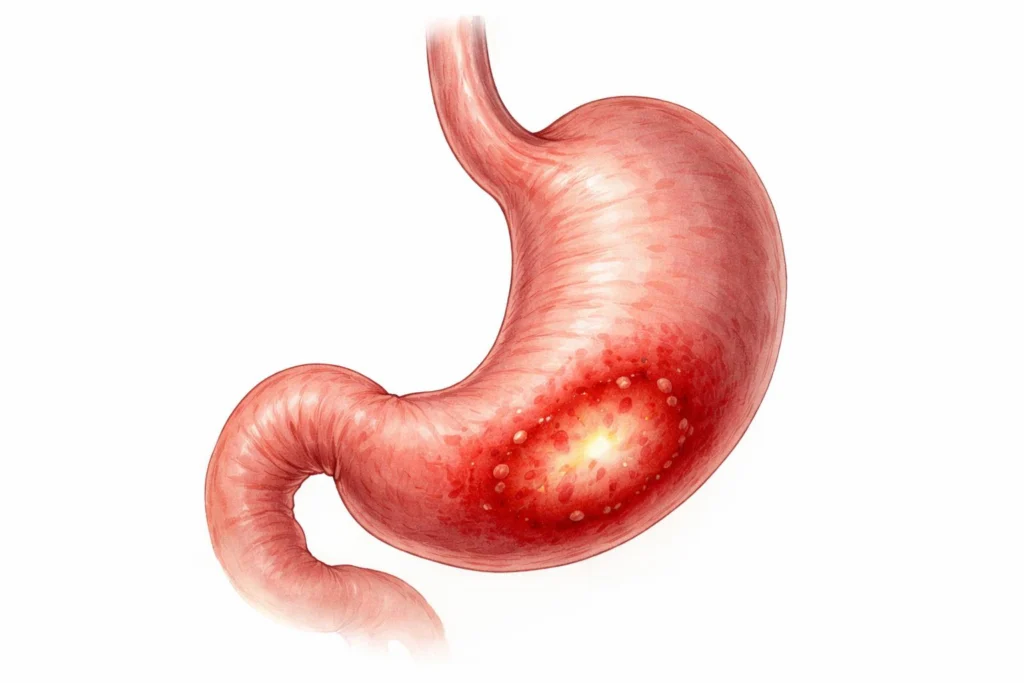
Helicobacter pylori infection is the main cause of stomach and duodenal ulcers. Stomach and duodenal ulcers develop when the damaged lining of the stomach or duodenum is exposed to hydrochloric acid and digestive enzymes. Helicobacter pylori weakens the protective barrier, leading to inflammation and erosion of the tissue. Although ulcers are not cancer in themselves, long-term untreated ulcers, especially in combination with chronic gastritis caused by Helicobacter pylori, may in some cases increase the risk of stomach cancer. Regular diagnosis and treatment are therefore key to prevention.
Prevention and education about the risk
Preventing Helicobacter pylori infection, and so reducing the risk of stomach cancer, rests on a few key aspects, including education about people infected with Helicobacter pylori. Above all, attention to personal hygiene and sanitation, including thorough handwashing and drinking clean water and eating safe food, significantly limits transmission of the bacteria. Education about the dangers of chronic infection and early diagnosis and treatment of Helicobacter pylori are extremely important. Regular check-ups, especially in people with symptoms of infection or in families with a history of stomach cancer, allow early detection and intervention, which significantly reduces the risk of serious complications.