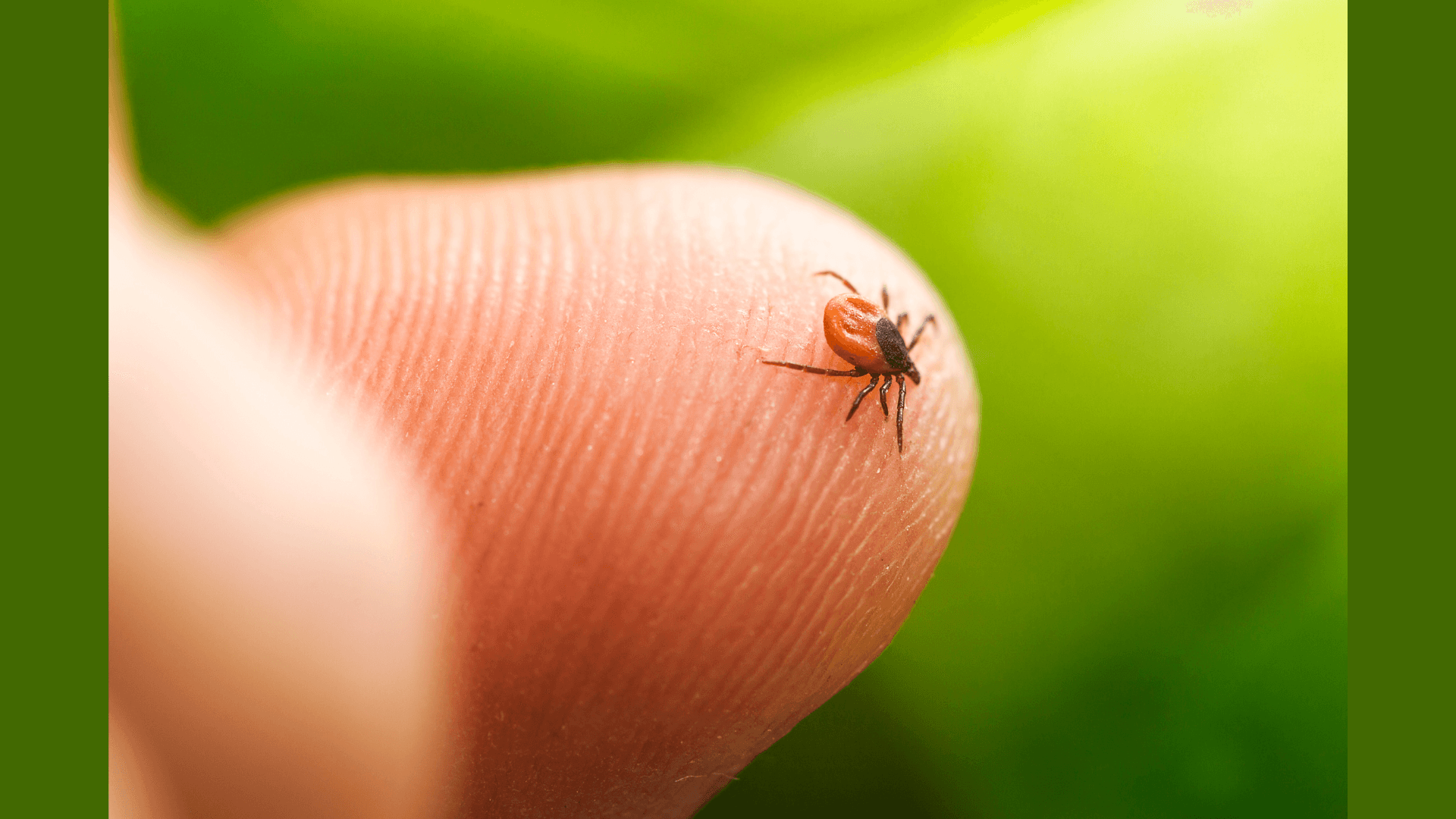
Ticks – a small enemy, a big threat. What do I need to know to protect myself?
A walk in the woods, a picnic in a meadow, a morning jog with the dog in the park – all of this sounds like the perfect way to relax. But it is exactly in places like these that a small, inconspicuous enemy lurks: the tick. Although it measures only a few millimetres, it can pose a serious threat to health. That is why it is worth knowing where you can pick up a tick, how to protect yourself and what to do if you find one on your body.
Where can you pick up a tick? Not only in the woods!
Contrary to popular belief, ticks are not found only in forests. You will also find them on lawns, in meadows and undergrowth, and even in city parks and allotments. Ticks usually sit on blades of grass and low shrubs, waiting for a person or animal to pass by so that they can latch on.
A moment’s inattention is enough: walking across a lawn or sitting in the shade of a tree, and they may already be on your skin.
How do I protect myself against ticks?
1. First of all – the right clothing. When you go somewhere ticks may be found:
- wear long trousers and a long-sleeved top,
- tuck your trousers into your socks (yes, it may look odd, but it works),
- choose light-coloured clothes, on which a tick is easier to spot.
2. Secondly – repellents. Products containing DEET, icaridin or IR3535 are available. Spray them on exposed skin and on your clothes.
3. Thirdly – avoid tall grass and undergrowth. If you have the choice, stick to well-trodden paths
How do I check whether I have a tick?
Be sure to check your whole body. Ticks most often attach in warm, moist places:
- behind the ears,
- on the back of the neck,
- in the armpits,
- in the folds of the elbows and knees,
- in the groin,
- around the navel.
Also check the scalp and ears – especially in children, who are shorter, so these parts of the body are more exposed.
A quick shower also helps – it washes off ticks that may not yet have attached.
Does every tick transmit disease?
No. But any tick can. Not all ticks carry diseases, but you cannot tell with the naked eye. What is more, even if an infected tick has bitten into your skin, infection does not always follow.
A lot depends on how long it stays on the body. The sooner you remove it, the lower the risk that it passes on pathogens. For Lyme disease the figure given is 24–36 hours, although some studies suggest the risk of infection may arise even earlier. That is why it is so important to check your whole body as soon as you get back.
What are the tick-borne diseases?
The most common are:
- Lyme disease (borreliosis) – bacterial; it can cause skin symptoms (e.g. erythema migrans, a spreading rash) as well as joint, neurological and heart symptoms.
- Tick-borne encephalitis (TBE) – viral; it can lead to serious neurological complications.
- Less often: babesiosis, anaplasmosis, bartonellosis.
I have a tick – what now?
Above all, don’t panic – act!
1. Remove it as soon as possible. Ideally with tweezers or a special tool (e.g. a lasso or a hook). Grasp it as close to the skin as possible and pull it out gently but firmly in a straight line – do not twist!
2. Don’t smear it with grease, alcohol or nail varnish! These methods can only increase the risk of infection, as the tick then "vomits" into the wound.
3. Disinfect the bite site.
4. Watch your skin for a few weeks. If a rash, swelling, joint pain or tiredness appears, see a doctor.
Do I need to see a doctor straight away?
Not always. If you have removed the tick yourself and have no symptoms, watching is enough.
If, however:
- you have difficulty removing the tick,
- the tick was attached for a long time (over 24–36 hours),
- a rash has appeared (>5 cm, spreading),
- you have flu-like symptoms, headaches, joint pain or tiredness
it is worth seeing an internist, a GP or a dermatologist.
Does every tick need to be tested?
No! Testing a tick in a laboratory is an expensive service, and the result still does not give a clear answer as to whether you have been infected. Even if the tick was a carrier, it does not mean you will be infected. That is why watching yourself is more important than testing the parasite.
Tick myths not worth believing
“Ticks fall from trees” – not true. They reach a height of 1–1.5 metres at most.
“If I remove the tick, I don’t need to worry about anything” – not true. Even a short attachment can transmit disease.
“A rash always appears with Lyme disease” – not true. It appears in only about 30–40% of patients.
Ticks are a real threat, but no reason to panic or give up the pleasure of spending time outdoors. Awareness, prevention and a quick response are enough.
By looking after your health, you protect yourself not only from ticks but also from serious complications. And knowing what to do, you won’t be caught off guard.
If anything does worry you, however, see an internist, for example at Medeor Clinic – they will assess your health and the risk of infection and, if necessary, refer you for further tests or suggest treatment.